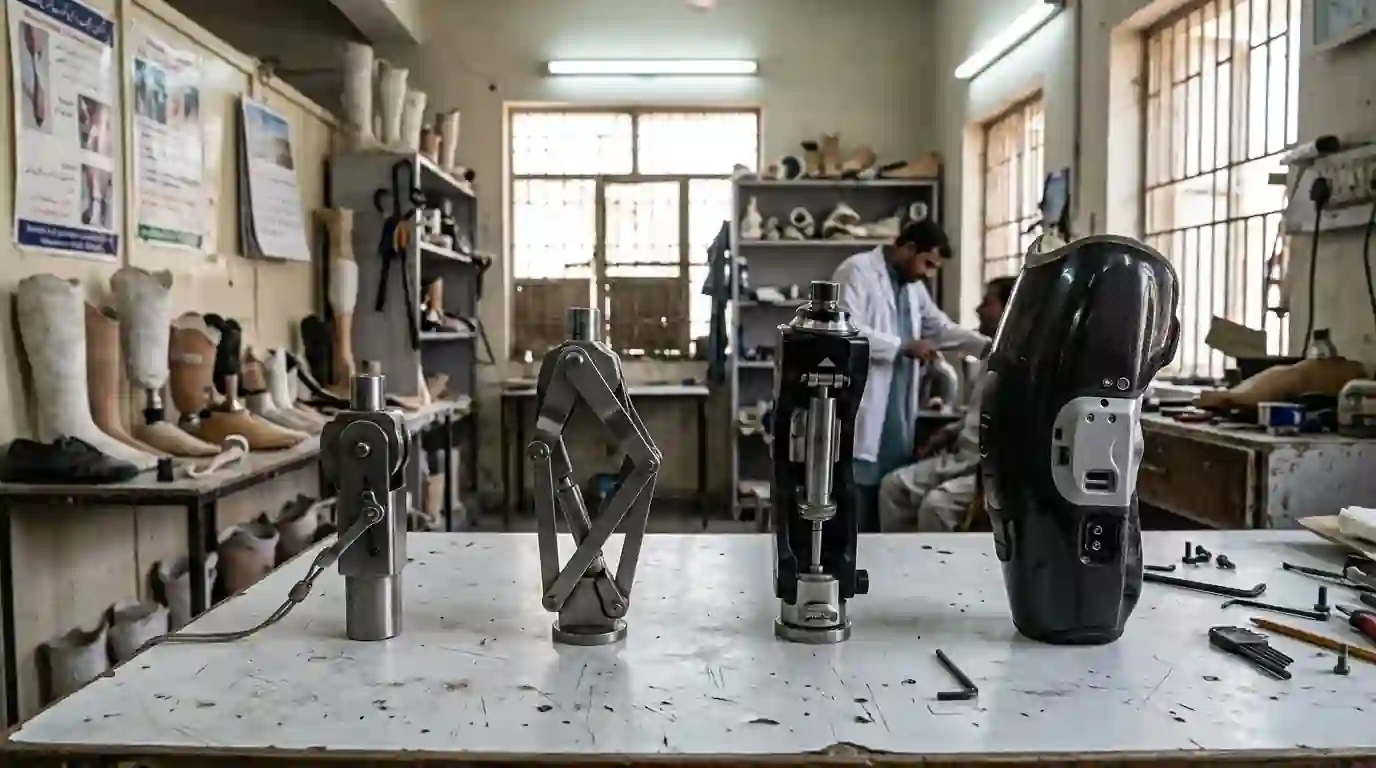
Choose the knee you will actually use
The most expensive knee is not the best knee for everyone. A locking knee is the safest for first legs and older users. A polycentric knee adds stability and toe clearance. A hydraulic knee keeps up with changes of speed for active walkers. A microprocessor knee adds stumble recovery and confident slopes and stairs for people who walk a great deal.
We recommend the knee that matches your strength, balance and daily walking, and we tell you honestly when a cheaper knee would serve you as well.
Do not save on the socket
Above the knee, the socket has to control the knee through your hip muscles and let you sit comfortably. A poorly fitting socket makes even the best knee feel unsafe. In every build, the socket and the test socket come first.
Microprocessor knees: what the money buys
Sensor control, stumble recovery, step-over-step stairs and less mental effort. For the right user, that can mean fewer falls and a fuller working life. For someone who walks mainly at home, it usually adds little over a good hydraulic or polycentric knee. Remember to budget for daily charging, servicing and future sockets.
Costs after the first year
Expect a new socket within one to three years in the early years, liners about yearly if you use them, and knee servicing from time to time. See upkeep over the years for a five-year example.