Local multiaxial Rs 120,000 to 200,000
A rubber-ankle multiaxial foot with our socket and a sleeve. Steady on rough ground.
- Assessment
- Test socket
- Training
Ankle movement in every direction
A multiaxial foot moves up and down, side to side and with a slight twist, so it settles flat on broken pavements, slopes and steps instead of tipping you over. It is the comfortable middle ground between a solid SACH foot and a springy carbon foot.
Reviewed by Ummad Shafique Mughal, Consultant Orthotist and Prosthetist. Updated October 2026.
In short
The short answer
A multiaxial foot has an ankle made of rubber bumpers or a small joint that lets the foot move in several directions. When you step on a stone, a kerb edge or a sloping road, the foot adapts to the surface while the socket stays upright, so less twisting reaches your stump and knee. Examples include the Ottobock Greissinger Plus and the College Park Trustep, which combines multiaxial movement with carbon springs.
A complete below knee leg with a multiaxial foot costs about Rs 120,000 to 400,000.

Is it right for you?
Compared
Each foot suits a different kind of ground and a different kind of walker.
| Foot | Best ground | Energy return | Indicative price of a below knee leg |
|---|---|---|---|
| SACH | Flat floors | Low | Rs 80,000 to 150,000 |
| Multiaxial | Uneven ground and slopes | Moderate | Rs 120,000 to 400,000 |
| Multiaxial with carbon springs | Uneven ground, active walking | Good | Upper end of the range |
| Carbon fibre | Flat to moderate ground, long walks | High | Rs 180,000 to 900,000+ |
Cost in 2026
Rs 120,000 to 400,000local to imported build
A rubber-ankle multiaxial foot with our socket and a sleeve. Steady on rough ground.
Imported multiaxial ankles with smoother movement and longer-lasting parts.
Multiaxial movement with carbon springs, for active users on mixed ground.
Indicative ranges. A firm figure comes in writing after the free assessment and does not change without your agreement. Full cost guide.
Your visits
Where you walk most and how your balance is.
Ankle stiffness matched to your weight.
Alignment checked on flat ground and on a ramp.
Practice on slopes, kerbs and steps.
Coming from out of town? Tell us your dates and we will plan the visits close together.
Most multiaxial feet have a block of rubber or a set of bumpers at the ankle. Under load, the rubber lets the foot tip forward and back, roll to either side and twist a little, then springs it back to neutral. It works like a simple version of your own ankle, keeping the sole flat on the ground even when the ground is not flat.
Broken footpaths, unpaved lanes, speed breakers, ramps into shops, the steps of a mosque and puddles after monsoon rain: daily walking in most Pakistani towns is rarely on flat, even ground. A multiaxial foot takes much of the twist out of these surfaces, so the stump and the knee feel less strain and you feel steadier.
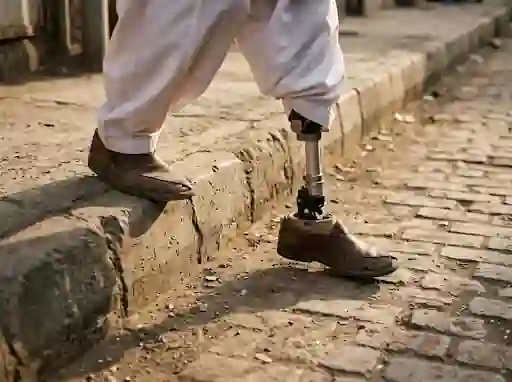
A multiaxial foot gives less push-off than a carbon fibre foot, so very long walks take a little more effort. Some users find the extra ankle movement feels wobbly at first; training on a ramp helps. Feet that combine multiaxial movement with carbon springs offer the best of both, at a higher price.
The rubber parts in the ankle wear over time and in heat can soften slightly. A squeak, a clunk or a wobbly feeling that was not there before is a sign to come in. We check the ankle at follow-ups and replace worn bumpers when needed.
Travelling to us?
Tell us your city or country and your travel dates when you call. We plan the visits as close together as the stump allows, so most patients can finish the casting, test socket and fitting in one stay, whether they come from Quetta or fly in from Dubai, with a shorter trip later for adjustments if needed.
Questions
A prosthetic foot whose ankle can move up and down, side to side and with a slight twist, so it adapts to uneven ground and slopes.
On uneven ground and slopes, usually yes, because it adapts to the surface. On flat floors for low-activity users, a SACH foot does the job for less.
About Rs 120,000 to 400,000 for a complete below knee leg, depending on the foot and whether it has carbon springs.
The rubber parts in the ankle wear over time and may need replacing. We check them at follow-ups; a squeak or a wobbly feel is a sign to come in.
Related
The most common leg we fit: your own knee bends, the socket and foot do the rest.
Read moreSimple, tough, affordable feet with a cushioned heel.
Read moreSpringy feet that store energy and give a stronger push-off.
Read moreLight, safe legs for standing, transfers and walking at home.
Read moreWe import and fit parts from Ottobock, Össur, Blatchford, Proteor, Fillauer and other makers to order, and we are independent of all of them. Brands we fit.
Fill this in and WhatsApp opens with your message ready to send. Add a photo of the stump in the chat if you can; it tells us more than any description.
Prefer to talk? Call +92 337 841 4002 at any hour.