Local build Rs 300,000 to 600,000
Laminated pelvic socket, a mechanical hip joint, a locking or polycentric knee and a SACH foot. Safe and stable for standing and walking at home.
- Free assessment
- Test socket fitting
- Walking training
Hip level amputation
A leg at hip level is the most demanding prosthesis we fit, for the patient as much as for us. You walk by tilting the pelvis to swing the leg, so success depends on core strength, determination and a socket that grips the pelvis comfortably. We are honest at the assessment about who will benefit.
Reviewed by Ummad Shafique Mughal, Consultant Orthotist and Prosthetist. Updated October 2026.
In short
The short answer
It is the leg for an amputation at the hip joint, or one that leaves only a very short piece of thigh. With nothing left to act as a lever, the leg is held by a socket moulded around the pelvis, and walking is done by tilting the pelvis to swing the leg through. A hip joint, a knee and a foot are lined up so that the leg stays straight and stable while you stand on it.
Prices start at Rs 300,000 and go beyond Rs 3,500,000 with imported hydraulic hip and knee systems.
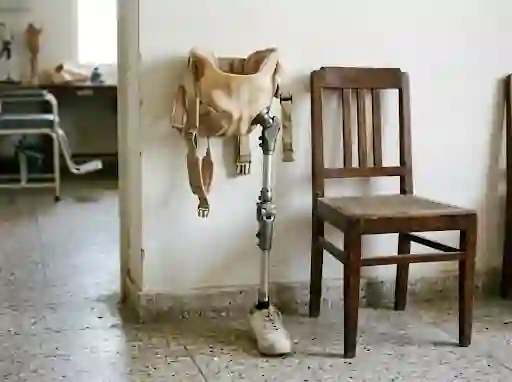
Is it right for you?
What goes into it
Three joints have to work together, and the pelvic socket carries all of them.
| Part | Local build | Imported build | What it changes for you |
|---|---|---|---|
| Socket | Laminated pelvic socket with straps | Lighter frame socket with flexible inner panels | Comfort when sitting, grip on the pelvis, heat |
| Hip joint | Mechanical hip joint with a forward stop | Hydraulic hip joint such as the Ottobock Helix3D | Step length, smoothness and effort |
| Knee | Locking or stable polycentric knee | Hydraulic or microprocessor knee | Safety and walking speed |
| Foot | SACH or local dynamic foot | Carbon fibre foot | Push-off |
| Cover | Optional | Foam cover for shape under clothes | How it looks when dressed |
Cost in 2026
Rs 300,000 to 3,500,000+open top end: imported parts
Laminated pelvic socket, a mechanical hip joint, a locking or polycentric knee and a SACH foot. Safe and stable for standing and walking at home.
A lighter socket design, a better hip joint, an imported knee and a dynamic foot.
Hydraulic hip and knee systems with premium feet. Microprocessor knees push the price higher.
Indicative ranges. A firm figure comes in writing after the free assessment and does not change without your agreement. Full cost guide.
Your visits
Strength, balance, skin and goals, with the family present if you like.
An impression of the pelvis, standing or lying.
Usually two fittings to get sitting comfort and grip right.
Hip, knee and foot set up so the leg is stable when you stand on it.
Pelvic tilt, steps between bars, sitting and standing, then stairs, over several sessions.
Hip level legs need more visits than any other level. If you are travelling, we plan the trial fittings and training around your stay.
Many people walk on a hip level leg, especially younger people and those who lost the leg to an accident or a tumour. It takes more effort than any other level, and walking is slower. Some users choose crutches for speed in daily life and wear the leg for standing at work, at weddings or at the mosque. Both are good outcomes.
At the assessment we look at strength, balance and what you want to do, and we tell you what is realistic. If we think the leg would end up unused, we say so before you spend anything.
The pelvic socket wraps around the pelvis above the hip bones and supports you through the sitting bone on the amputated side. It has to grip firmly enough to control the leg, yet let you sit comfortably on a chair and on a car seat. A leg that hurts when you sit is soon left in a cupboard, so sitting comfort is something we test at every trial fitting.
Heat is a real issue in Pakistani summers. Lighter frame sockets with cut-outs and breathable inner layers help, and short breaks to dry the skin are part of daily routine.
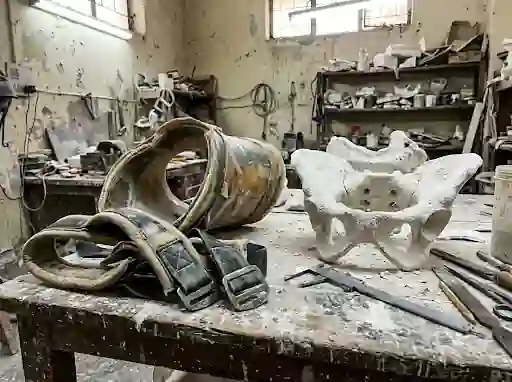
Walking starts with learning to tilt the pelvis to swing the leg forward and to trust the hip and knee as you stand on them. Training begins between parallel bars, then moves to crutches or a stick, sitting down and standing up, and finally stairs one at a time. Expect more sessions than for other levels, and daily practice at home in between.
After a hemipelvectomy, where part of the pelvis is removed, the same principles apply but the socket has to take weight on soft tissue, the opposite pelvis and sometimes the lower ribs. These legs are assessed case by case, often together with your surgeon, and take more trial fittings.
Travelling to us?
Tell us your city or country and your travel dates when you call. We plan the visits as close together as the stump allows, so most patients can finish the casting, test socket and fitting in one stay, whether they come from Quetta or fly in from Dubai, with a shorter trip later for adjustments if needed.
Questions
Yes, many do, especially younger people and those who lost the leg to an accident or a tumour. It takes more effort than any other level, and some users choose crutches for speed and the leg for standing and special occasions. We help you decide honestly.
It has three joints instead of one or two, and a large pelvic socket that takes more than one trial fitting. Imported hip and knee joints at this level are costly too. The local build from Rs 300,000 keeps the price down without cutting safety.
It can be, if the socket is shaped well around the sitting bone. We test sitting comfort at every trial fitting, because a leg that hurts when you sit soon goes unused.
Usually five to seven, including more than one trial socket and several training sessions. Families travelling from other cities should plan for a longer stay or two trips.
Related
Replaces the knee too. The knee joint you choose shapes how you walk.
Read moreKnees that stay straight until you unlock them to sit. Safest for first legs.
Read moreThe part you feel all day, cast and test-fitted to your stump.
Read moreWalking lessons on the new leg, from balance to stairs.
Read moreWe import and fit parts from Ottobock, Össur, Blatchford, Proteor, Fillauer and other makers to order, and we are independent of all of them. Brands we fit.
Fill this in and WhatsApp opens with your message ready to send. Add a photo of the stump in the chat if you can; it tells us more than any description.
Prefer to talk? Call +92 337 841 4002 at any hour.