Local build Below knee from Rs 80,000
Soft socket, simple suspension and a SACH foot below the knee; with a locking knee above the knee from Rs 150,000.
- Free assessment
- Test socket
- Training with family
Legs for older patients
For an older parent, the right leg is the one they can put on, stand up in and walk with safely, not the most expensive one. We look honestly at strength, balance, eyesight and heart health, and set goals the whole family can agree on.
Reviewed by Ummad Shafique Mughal, Consultant Orthotist and Prosthetist. Updated October 2026.
In short
The short answer
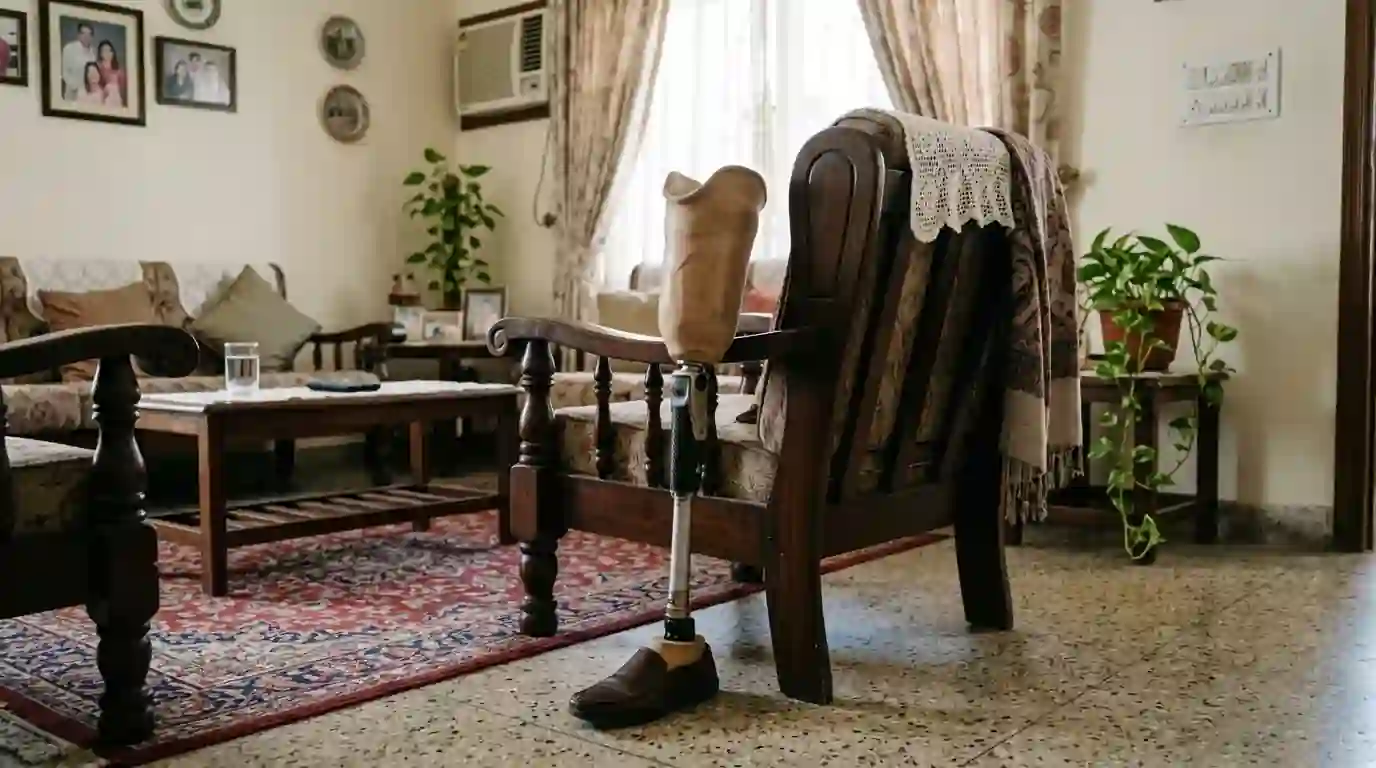
A good leg for an older patient is light, easy to put on, stable when standing and comfortable to sit in. Below the knee, that usually means a soft socket with a liner and a dependable foot. Above the knee, it often means a locking or stable polycentric knee, so the leg cannot give way. The aim may be walking in the house and to the mosque, or simply standing for transfers and prayer; both are worthwhile.
Prices follow the level of amputation: below knee from Rs 80,000, above knee from Rs 150,000.
Is it right for you?
What we choose
Every choice leans towards safety, comfort and ease of use.
| Choice | What we usually recommend | Why |
|---|---|---|
| Weight | The lightest build that is still strong | Less effort with every step |
| Socket and liner | Soft liner or soft inner socket | Older skin is thinner and bruises easily |
| Suspension | Simple sleeve, strap or easy pin lock | Easy to put on, even with stiff hands |
| Knee (above knee) | Locking or stable polycentric knee | The knee cannot give way unexpectedly |
| Foot | SACH or soft multiaxial foot | Stable on uneven floors and cushioned |
Cost in 2026
Most older patients do best with the local or comfort build. Imported knees rarely help someone who walks mainly at home.
Rs 80,000 to 2,500,000+open top end: imported parts
Soft socket, simple suspension and a SACH foot below the knee; with a locking knee above the knee from Rs 150,000.
A gel liner for fragile skin, a multiaxial foot for uneven floors and, above the knee, a stable polycentric knee.
For older patients who walk outdoors every day, an imported foot or hydraulic knee can help. We only suggest it when it will really be used.
Indicative ranges. A firm figure comes in writing after the free assessment and does not change without your agreement. Full cost guide.
Your visits
Strength, balance, eyesight, home layout and goals, with family present.
Usually seated and quick.
Comfort checked sitting and standing.
The leg is set up for stability first.
Short sessions: standing, transfers, then steps with a frame.
We keep sessions short for older patients, and we are happy to plan visits around a family member's leave or travel dates.
Standing to move from bed to chair, standing for namaz, walking to the bathroom at night, walking to the mosque or the market: each is a real goal, and a leg that achieves the first one well can change daily life for the patient and the family.
We talk about goals at the assessment, with sons and daughters present, including those joining by phone from abroad, so everyone knows what to expect and nobody is disappointed by a leg that was never meant to do more.
Above the knee, a locking knee stays straight while walking and unlocks only to sit, so it cannot buckle. A stable polycentric knee is the next step for those with good balance. Below the knee, a cushioned foot and a well-fitted socket do most of the work.
At home, remove loose rugs, add a grab rail by the bed and in the bathroom, and keep a night light on the way to the toilet. Never walk on a wet bathroom floor without the leg on and a hand on something firm. A walking frame is often safer than a stick in the first months.
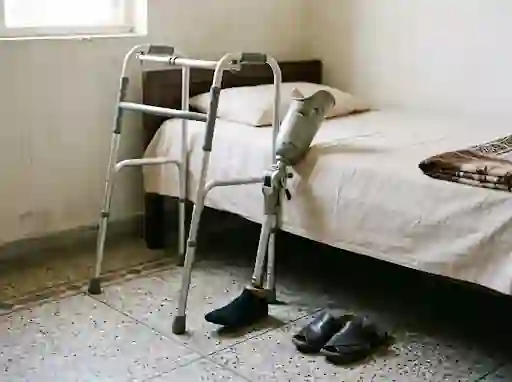
Older skin bruises and tears more easily, and many older patients also have diabetes or poor circulation. Soft liners, a daily skin check by a family member, and an early call to us about any red mark keep small problems small. Our page on fitting after diabetic amputation explains more.
Travelling to us?
Tell us your city or country and your travel dates when you call. We plan the visits as close together as the stump allows, so most patients can finish the casting, test socket and fitting in one stay, whether they come from Quetta or fly in from Dubai, with a shorter trip later for adjustments if needed.
Questions
Age alone is not the deciding factor. Strength, balance, heart and lung health and motivation matter more. Many people in their seventies use a leg for standing and walking at home. We assess honestly and say if a wheelchair would serve better.
A locking knee is the safest: it stays straight while walking and is unlocked only to sit. A stable polycentric knee is the next step for those with good balance.
Usually more sessions than for a younger adult, kept short to avoid tiredness. Many older patients stand and transfer safely within a few sessions; walking takes longer.
Yes. Send photos and the surgeon's notes on WhatsApp and we will explain the options and give a written estimate. Your mother comes to the Karachi clinic for the visits, ideally with a family member who lives nearby.
Related
The most common leg we fit: your own knee bends, the socket and foot do the rest.
Read moreReplaces the knee too. The knee joint you choose shapes how you walk.
Read moreKnees that stay straight until you unlock them to sit. Safest for first legs.
Read moreSofter sockets and closer skin checks for a stump that heals slowly.
Read moreWe import and fit parts from Ottobock, Össur, Blatchford, Proteor, Fillauer and other makers to order, and we are independent of all of them. Brands we fit.
Fill this in and WhatsApp opens with your message ready to send. Add a photo of the stump in the chat if you can; it tells us more than any description.
Prefer to talk? Call +92 337 841 4002 at any hour.