Local pair Rs 160,000 to 450,000
Two laminated sockets with sturdy local feet, and locking or stable knees where needed. Safe, repairable and the usual first pair.
- Free assessment
- Test sockets for both sides
- Extended walking training
Bilateral amputation
When both legs are lost, the two legs have to be designed, aligned and trained together, not one after the other as two separate jobs. Balance now comes from the legs and the socket fit rather than from a sound leg, so the plan is more careful and training takes longer.
Reviewed by Ummad Shafique Mughal, Consultant Orthotist and Prosthetist. Updated October 2026.
In short
The short answer
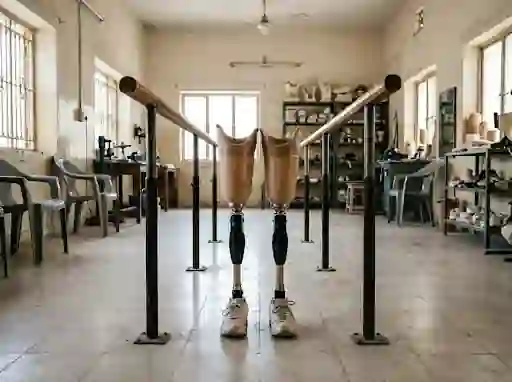
Each leg is built for its own level: often two below knee legs, sometimes one below and one above the knee, or two above knee legs. What changes is the planning. Both sockets are made together, the legs are set to a height and alignment that work as a pair, and walking training starts with balance, because there is no sound leg to lean on.
Two below knee legs start from Rs 160,000 for the pair. Two above knee legs start from Rs 320,000, and the top end passes Rs 5,000,000 with imported microprocessor knees on both sides.
Is it right for you?
Combinations
The two levels decide the plan. These are the combinations we see most often.
| Combination | Usual starting point | Indicative price for the pair | Training |
|---|---|---|---|
| Both below knee | Two full-height legs | Rs 160,000 to 1,800,000+ | Several weeks |
| One below, one above knee | Full height, with a stable knee on the above knee side | Rs 230,000 to 3,400,000+ | Longer |
| Both above knee | Often short training legs first, then full height | Rs 320,000 to 5,000,000+ | Longest |
| Through-knee or hip on one side | Planned case by case | Given after assessment | Longest |
Cost in 2026
Prices are for the pair. The levels and the knees, if any, set most of the cost.
Rs 160,000 to 5,000,000+open top end: imported parts
Two laminated sockets with sturdy local feet, and locking or stable knees where needed. Safe, repairable and the usual first pair.
Imported liners and dynamic feet on both sides, with polycentric or hydraulic knees for above knee levels.
Premium feet and suspension on both sides, up to microprocessor knees for two above knee legs.
Indicative ranges. A firm figure comes in writing after the free assessment and does not change without your agreement. Full cost guide.
Your visits
Both stumps, skin, strength and balance, with family present if you like.
Both sides cast, usually in one visit.
You stand between bars while we check fit and set the height of both legs.
Both legs aligned together so neither side overloads the other.
Balance first, then steps with a frame, then sticks, over several weeks.
Families coming from another city or from abroad should plan a longer stay, or two trips a few weeks apart.
With one amputation, the sound leg does much of the balancing and the artificial leg follows. With two, there is no sound leg, so both sockets must be comfortable enough to stand on for long periods, and both legs must be set to the same height and alignment. A small difference in length that a single amputee would hardly notice can tip the pelvis and cause back pain for someone on two legs.
That is why we make both test sockets before finishing either leg, and why we align the pair while you stand and step between parallel bars, adjusting one side and then the other until you feel level.
After two above knee amputations, many people start on short legs, often called stubbies: sockets fitted with small feet and no knees, which bring your centre of gravity close to the ground. They are very stable, and they let you practise balance and build hip strength safely.
Once you are confident, the legs are lengthened step by step and knees are added. Some users keep a pair of stubbies for use at home or for sitting on the floor with the family.
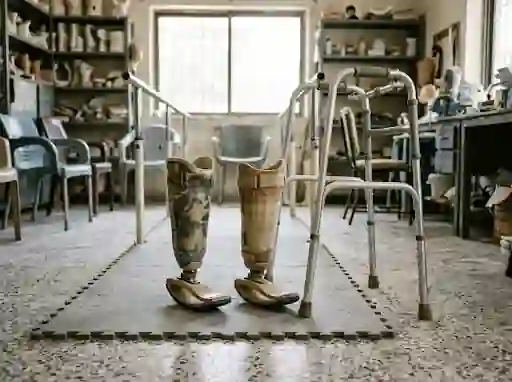
Training starts with standing up from a chair, then balance between bars, shifting weight from side to side, and taking steps with a walking frame. Crutches or two sticks come next, and stairs, slopes and getting up from the floor come last. Expect more sessions than for one leg, and daily practice at home in between.
A wheelchair often stays part of life for long distances, and that is a sensible choice, not a failure. The legs then serve for standing, short walks and the moments that matter most.
Heat. Two sockets mean twice the sweat. Take both liners off at midday to dry the skin.
Home. A western toilet or a commode chair, a grab rail by the bed and a ground-floor room make daily life much safer.
Namaz. Most users pray seated on a chair, standing with the legs on where they can. Our namaz and wudu guide covers the options.
Travel. Ask the airline for wheelchair assistance at the airport, and carry the legs in the cabin if you can.
Travelling to us?
Tell us your city or country and your travel dates when you call. We plan the visits as close together as the stump allows, so most patients can finish the casting, test socket and fitting in one stay, whether they come from Quetta or fly in from Dubai, with a shorter trip later for adjustments if needed.
Questions
Many people do, especially when both amputations are below the knee. With two above knee amputations, walking takes much more effort; many users walk at home and for short distances and use a wheelchair outside. We set goals together at the assessment.
Usually yes. Both sockets are cast and test-fitted before either leg is finished, so the pair can be aligned together. If one side heals much later, we discuss whether to fit the healed side first.
From Rs 160,000 for two local below knee legs, and from Rs 320,000 for two above knee legs. Mixed and imported builds cost more, up to Rs 5,000,000 or beyond with microprocessor knees on both sides.
Short training legs without knee joints, used mostly after two above knee amputations. They keep you close to the ground while you learn balance and build strength, and many people keep them for home.
Related
The most common leg we fit: your own knee bends, the socket and foot do the rest.
Read moreReplaces the knee too. The knee joint you choose shapes how you walk.
Read moreWalking lessons on the new leg, from balance to stairs.
Read moreLight, safe legs for standing, transfers and walking at home.
Read moreWe import and fit parts from Ottobock, Össur, Blatchford, Proteor, Fillauer and other makers to order, and we are independent of all of them. Brands we fit.
Fill this in and WhatsApp opens with your message ready to send. Add a photo of the stump in the chat if you can; it tells us more than any description.
Prefer to talk? Call +92 337 841 4002 at any hour.