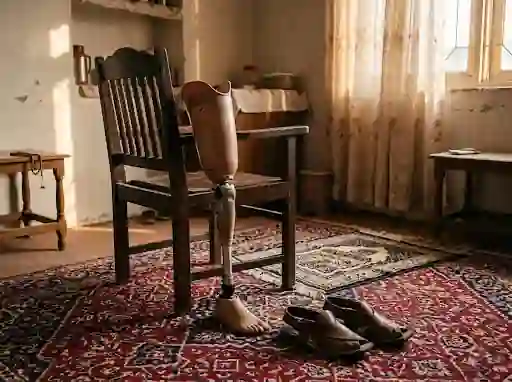
Wudu with the leg on or off
The simplest way is to sit on a sturdy stool with the leg off, wash, then dry the stump well before putting the liner back on; a damp stump in a liner causes skin problems. Ordinary legs must stay dry, so if you want to stand for wudu several times a day, a light waterproof leg is worth considering.
Standing for namaz
Stand with the leg on, feet comfortably apart and weight shared between both legs. In the first months, pray near a wall or a chair you can touch for balance. Long standing can tire the stump; there is no shame in sitting for part of the prayer.

Ruku, sajda and sitting
After a below knee amputation, many users can bend into ruku and go down for sajda with practice, though kneeling puts pressure on the stump and the socket edge. After an above knee amputation, the prosthetic knee does not bend under load the way a natural knee does, so most users pray seated on a chair for sajda and jalsa. Some take the leg off for prayer at home. We can practise getting down and up safely in training.
At the mosque
Many mosques keep prayer chairs. Shoes come off at the door, so wear clean socks over the prosthetic foot shell, and take care on polished marble, which can be slippery for the artificial foot. Steps and crowds at Jumma need patience; arriving a little early helps.
Keeping the leg clean
Wipe the liner and the inside of the socket daily with a clean damp cloth and mild soap, and dry them well. Keep the outside of the leg clean like a shoe. Remove the leg and liner before ghusl.
Rulings and your scholar
Questions about wudu over a prosthesis, praying seated, or ghusl with a leg are matters of fiqh, and the answer can depend on your school and your situation. We cover the practical side here; for the ruling, please ask a scholar you trust.