Skip to content
Artificial LegPakistan اردو

Patient guide

Walking with a new artificial leg: tips that help

Walking well on a new leg is a skill, and like any skill it comes from short, regular practice rather than long, painful sessions. These tips build on the training you get at the fitting.

  • Free first assessment
  • Firm price in writing
  • Answered 24/7

Reviewed by Ummad Shafique Mughal, Consultant Orthotist and Prosthetist. Updated October 2026.

In short

How do you learn to walk on a new artificial leg?

The short answer

Start with short sessions several times a day, built up week by week. Stand tall, take equal steps, and practise turning, sitting and standing before going outdoors. For stairs, go up with the sound leg and down with the artificial leg, holding a rail.

Stop and check the skin if anything hurts, and keep coming to follow-ups: a limp is often fixed by adjusting the leg.

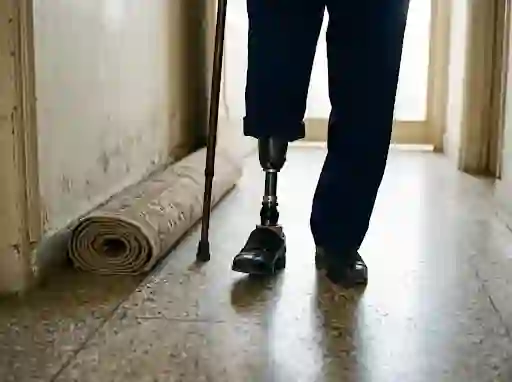
Lower legs of a man walking along a tiled hallway with a stick and a below knee leg
Short, regular practice works best

Putting the leg on properly

Most walking problems start with a leg put on badly. Roll the liner on without wrinkles or trapped air, use the number of socks you were shown, and make sure the leg is fully on before standing: with a pin lock, listen for the clicks; with a sleeve, check it is smooth. Sit down to put the leg on, never on one leg.

The first days: short and often

Wear the leg for an hour or two at a time at first, then take it off and check the skin. Increase the time a little each day. Practise at home, holding a counter or using a frame, before you go outdoors. Tiredness is normal; sharp pain is not.
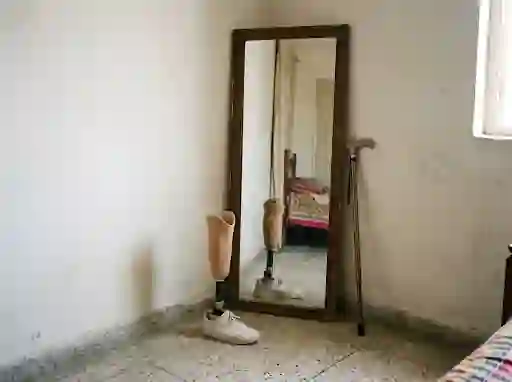
An artificial leg standing in front of a full-length mirror with a walking stick
A mirror helps you check your walk at home

Equal steps and an upright body

New users often take a long step with the artificial leg and a short one with the sound leg, or lean over the artificial side. Aim for equal steps and an upright body, with your weight going fully onto the artificial leg. A mirror at the end of a hallway helps you see what you are doing.

Turning, chairs and the toilet

Turn in small steps rather than pivoting on the artificial foot. To sit, back up until you feel the chair behind both legs, reach for the armrests and lower yourself. A raised toilet seat or a commode frame makes the bathroom safer in the first months.

Stairs, slopes and kerbs

Go up stairs with the sound leg first, then bring the artificial leg up; come down with the artificial leg first. Always hold a rail. On steep slopes, walking slightly sideways can feel safer. Treat a kerb like a single stair. With practice and the right knee or foot, many users progress beyond these rules.

If you fall

Everyone falls sometimes. Try to land on your side rather than your hands. To get up, roll onto your knees, crawl to a sturdy chair, put your hands on the seat and push up with the sound leg. If you are hurt, or the leg is damaged, call for help and call us. See gait training.

Questions

Questions people ask

How long until I can walk without a stick?

It varies. Many below knee users walk without support within weeks of daily practice; above knee users and older patients often keep a stick outdoors for longer, and that is fine.

Why do I limp?

A limp can come from the alignment of the leg, the socket, weak hip muscles or habit. Come in and we will check the leg before you practise around the problem.

Should walking on the leg hurt?

Some tiredness and pressure are normal at first. Sharp pain, or red marks that have not faded twenty minutes after taking the leg off, are not; call us.

How long should I wear the leg each day?

Start with an hour or two at a time and increase a little each day, checking the skin each time you take it off.

Related

Read next

Alignment

When the leg does not feel right.

Read more

WhatsApp

Questions about your own leg? Ask us

Fill this in and WhatsApp opens with your message ready to send. Add a photo of the stump in the chat if you can; it tells us more than any description.

  1. Fill in what you know. Leave anything you are unsure about blank.
  2. Send it on WhatsApp and attach a clear stump photo from the front and the side.
  3. We reply with the options, the likely price range and the next step.

Prefer to talk? Call +92 337 841 4002 at any hour.

Opens WhatsApp on your phone or computer. Nothing you type here is stored on this website.

CallWhatsApp