Entry carbon Rs 180,000 to 350,000
A dependable carbon fibre foot with our socket and a sleeve or pin lock. A big step up from a SACH foot.
- Assessment
- Test socket
- Training
Energy-storing foot
A carbon fibre foot bends like a leaf spring as you roll over it, stores some of your energy and gives it back as you push off. It makes walking faster and less tiring for active users, and it is the upgrade people ask us about most.
Reviewed by Ummad Shafique Mughal, Consultant Orthotist and Prosthetist. Updated October 2026.
In short
The short answer
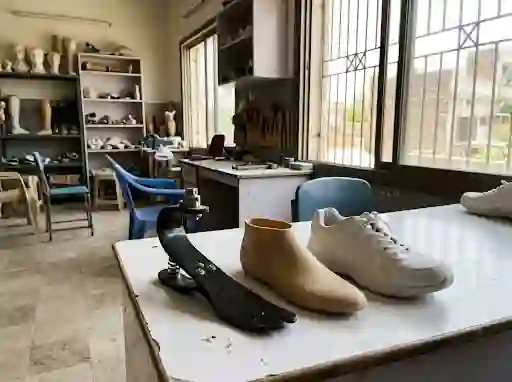
A carbon fibre foot is made from layers of carbon fibre bonded into springs, usually a keel running along the foot and a separate heel spring. When you land on the heel and roll forward, the springs compress; as you push off, they release. Compared with a solid SACH foot, it gives a livelier, more natural walk and less effort over long distances. Well-known feet include the Össur Vari-Flex and Pro-Flex, the Ottobock Triton and the Fillauer AllPro.
A complete below knee leg with a carbon fibre foot costs about Rs 180,000 to 900,000, depending on the foot and the socket system.
Is it right for you?
Compared
Feet differ in how they feel, what ground they suit and what they cost.
| Foot type | Feel | Best for | Indicative price of a below knee leg |
|---|---|---|---|
| SACH | Solid, with a cushioned heel | Low activity, tight budgets | Rs 80,000 to 150,000 |
| Multiaxial | Flexible at the ankle | Uneven ground and slopes | Rs 120,000 to 400,000 |
| Carbon fibre | Springy, with energy return | Active walkers | Rs 180,000 to 900,000+ |
| Hydraulic ankle | Smooth on slopes and stairs | Very active users | Upper end of the range |
Cost in 2026
Rs 180,000 to 900,000+open top end: imported parts
A dependable carbon fibre foot with our socket and a sleeve or pin lock. A big step up from a SACH foot.
Higher-category carbon feet with more energy return, with a silicone liner.
Top carbon and hydraulic ankle feet such as the Blatchford Echelon, with vacuum suspension, for very active users.
Indicative ranges. A firm figure comes in writing after the free assessment and does not change without your agreement. Full cost guide.
Your visits
Your weight, activity, shoes and current foot.
Category and stiffness matched to your weight and walking.
Alignment set so the spring loads and releases at the right moment.
Learning to roll over the foot and use the push-off.
Coming from out of town? Tell us your dates and we will plan the visits close together.
When your heel lands, the heel spring compresses and cushions the step. As you roll forward, the long keel bends under your weight, storing energy like a bow. At the end of the step, the keel straightens and pushes you forward. That push is what a SACH foot cannot give, and it is why carbon feet feel lighter to walk on even when they weigh about the same.
Carbon feet are made in different stiffness categories for different body weights and activity levels, which clinicians often describe as activity levels or K-levels. Too soft and the foot collapses and feels flat; too stiff and it feels harsh and pushes the knee back. We choose the category from your weight and how you walk, and we check it again if your weight or activity changes.
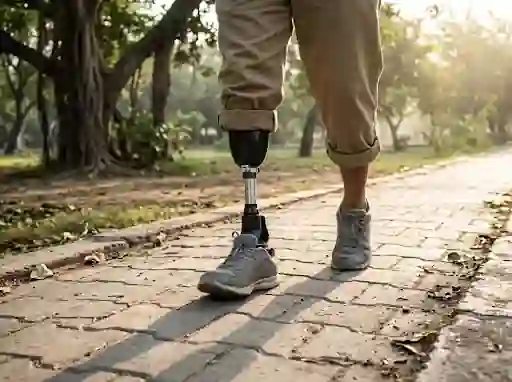
Carbon feet sit inside a foot shell that fits a normal shoe. The foot is aligned for one heel height, so tell us whether you live in joggers, formal shoes or sandals. Walking on the bare foot shell wears it out and changes the alignment, so wear socks or light shoes at home, and take care on polished mosque floors. Some feet are designed to work in sandals; ask us if chappals matter to you.
Carbon feet often last three to five years of daily walking. Sand and grit getting between the foot and the shell cause squeaks and wear, so a thin protective sock over the foot helps, especially in dusty months. A crack, a new click or a feeling that the spring has gone flat means it is time for a check.
Travelling to us?
Tell us your city or country and your travel dates when you call. We plan the visits as close together as the stump allows, so most patients can finish the casting, test socket and fitting in one stay, whether they come from Quetta or fly in from Dubai, with a shorter trip later for adjustments if needed.
Questions
For active users who walk a lot, usually yes: walking is faster and less tiring. For someone who walks mainly at home, a SACH or multiaxial foot often gives better value.
A complete below knee leg with a carbon fibre foot costs about Rs 180,000 to 900,000, depending on the foot and the socket system. The written estimate shows the foot separately.
Most carbon feet are designed to be worn in a shoe, inside a foot shell. Short steps at home in socks are fine, but walking on the bare shell wears it out and changes the alignment.
There is no single best. The right foot depends on your weight, activity and goals. We are independent of every manufacturer and choose the foot that suits you.
Related
The most common leg we fit: your own knee bends, the socket and foot do the rest.
Read moreFeet that tilt and twist to cope with uneven streets and slopes.
Read moreCarbon blades for running and sport, fitted for serious training.
Read moreSimple, tough, affordable feet with a cushioned heel.
Read moreWe import carbon feet from Össur, Ottobock, Fillauer, Blatchford, Proteor and College Park to order, and we are independent of all of them. Brands we fit.
Fill this in and WhatsApp opens with your message ready to send. Add a photo of the stump in the chat if you can; it tells us more than any description.
Prefer to talk? Call +92 337 841 4002 at any hour.