Laminated socket Rs 40,000 to 90,000
A durable resin socket with socks or a soft insert. The standard for most local builds.
- Casting
- Test socket
- Alignment
The part that touches you
The socket is the only part of an artificial leg that touches you, and it decides whether you wear the leg all day or leave it in a corner. We cast every socket to your stump, test it in clear plastic, and only then make the final one.
Reviewed by Ummad Shafique Mughal, Consultant Orthotist and Prosthetist. Updated October 2026.
In short
The short answer
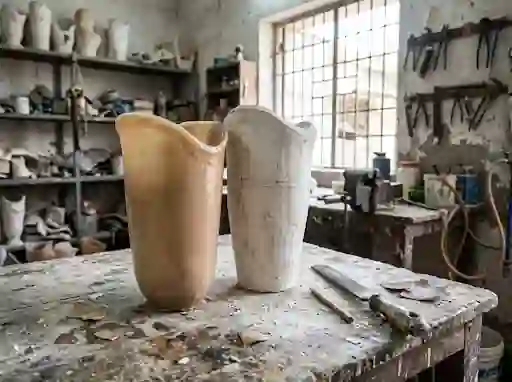
A prosthetic socket is the shell that holds your stump and joins it to the rest of the leg. It is made from a plaster cast of your stump that is then reshaped by hand, so that pressure falls on the areas that can take it and is eased over bone ends, scars and tender spots. Every socket we make is tried first as a clear test socket, so we can see the skin under load before the final socket is made.
A new socket costs Rs 40,000 to 200,000 depending on the design and materials. With a new leg, it is included in the price.
Is it right for you?
Socket designs
The design is chosen for your stump, your skin and how you will hold the leg on.
| Socket design | How it holds you | Feel | Indicative price |
|---|---|---|---|
| Laminated hard socket | Shaped resin shell with socks or a soft insert | Firm and durable | Rs 40,000 to 90,000 |
| Thermoplastic socket | Heat-formed plastic, easy to adjust | Lighter, adjustable | Rs 40,000 to 80,000 |
| Flexible inner socket in a frame | Soft inner wall inside a cut-away rigid frame | Comfortable and cooler | Rs 80,000 to 160,000 |
| Thin socket for liner systems | Strong, slim shell for pin lock or vacuum | Light and slim | Rs 100,000 to 200,000 |
Cost in 2026
Most of the cost is skilled work: casting, shaping the mould by hand and checking a test socket.
Rs 40,000 to 200,000local to imported build
A durable resin socket with socks or a soft insert. The standard for most local builds.
A soft inner wall inside a rigid frame, more comfortable when sitting and cooler in summer.
A thin, light socket made to work with a silicone liner and a pin lock or vacuum seal.
Indicative ranges. A firm figure comes in writing after the free assessment and does not change without your agreement. Full cost guide.
Your visits
We feel the bone ends, check scars and skin, and measure.
A plaster impression, then hand shaping of the mould.
You stand and walk in clear plastic while we watch the skin.
Laminated or formed, then aligned to the rest of the leg.
Coming from out of town? Tell us your dates and we will plan the visits close together.
A knee or a foot can be the best money can buy, but every step still passes through the socket. If it presses on a bone, rubs a scar or lets the stump slide, you feel it with every step, and before long the leg is left in a corner. A well-made socket on a simple leg will be worn all day; a poor socket on an imported leg will not.
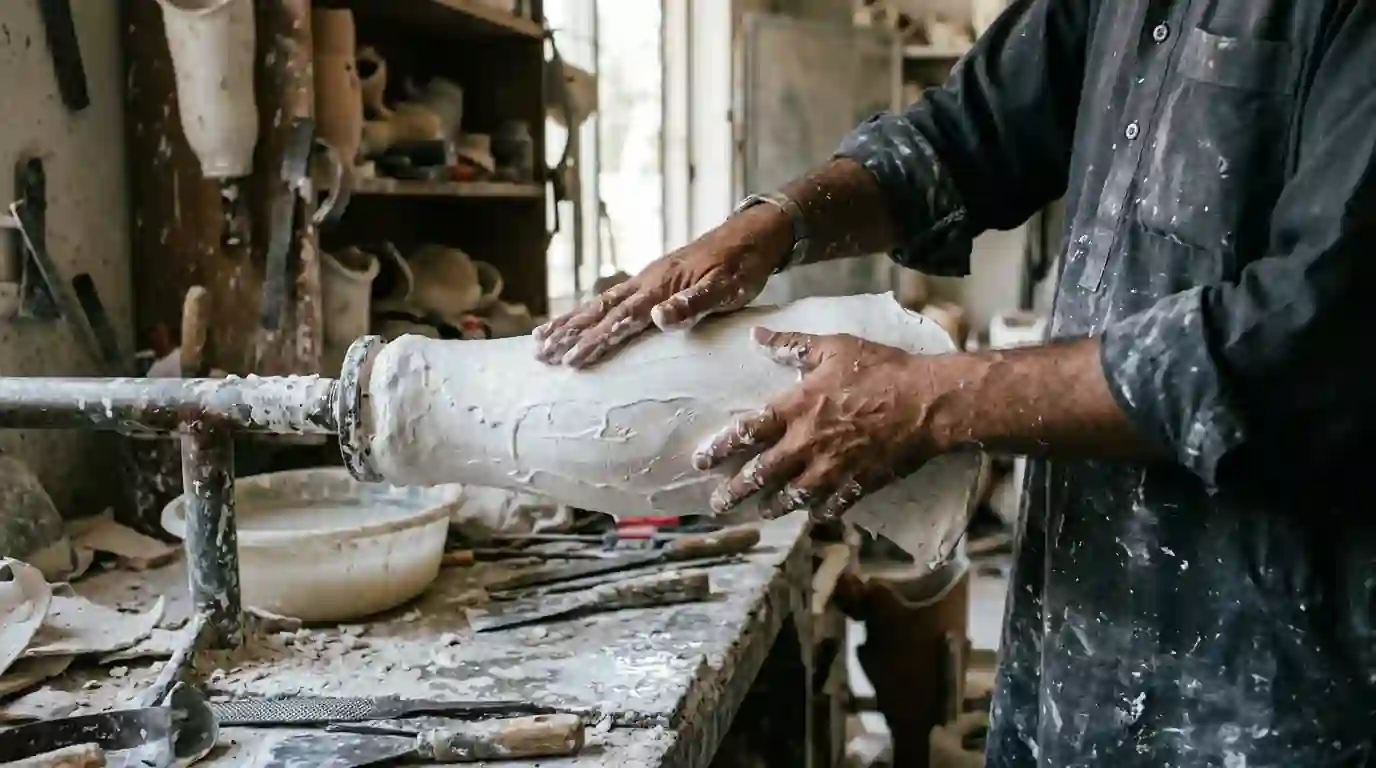
We wrap the stump in plaster bandage to make a negative impression, then fill it to make a solid mould of your stump. That mould is reshaped by hand: plaster is added over bony areas such as the end of the shin bone and the head of the fibula, so the socket stands off them, and taken away where the stump can bear load, such as the tendon below the kneecap and the muscle at the back of the calf. This shaping is where the skill of the prosthetist lies.
From the shaped mould we make a clear plastic test socket. You stand and walk in it while we look through at the skin. White patches show where pressure is too high; red marks that last show where it rubs. We adjust and test again, sometimes twice, before making the final socket. It takes an extra visit, and it prevents most sore spots.
Any of these is a reason to call. Often an adjustment or a pad fixes it; sometimes a new socket is due.
Travelling to us?
Tell us your city or country and your travel dates when you call. We plan the visits as close together as the stump allows, so most patients can finish the casting, test socket and fitting in one stay, whether they come from Quetta or fly in from Dubai, with a shorter trip later for adjustments if needed.
Questions
Most of the cost is skill and time: casting, hand-shaping the mould, making and checking a test socket, then laminating and aligning the final socket. That work is what makes a leg comfortable.
Often within one to three years in the early years, as the stump shrinks and changes. Later, sockets can last longer if your weight and stump stay stable.
Yes, in most cases. The knee, pylon and foot can often be kept if they are in good condition. See our page on socket replacement.
Yes. It is the only way to see how the skin reacts under load before the final socket is made. Every leg we make goes through one.
Related
A new socket for an old leg when the stump has changed shape.
Read moreA cushioned second skin between stump and socket, for comfort and grip.
Read moreA sealed socket that holds the leg on firmly with a gentle vacuum.
Read moreFine-tuning a leg that causes pain, a limp or a sore back.
Read moreWe import and fit parts from Ottobock, Össur, Blatchford, Proteor, Fillauer and other makers to order, and we are independent of all of them. Brands we fit.
Fill this in and WhatsApp opens with your message ready to send. Add a photo of the stump in the chat if you can; it tells us more than any description.
Prefer to talk? Call +92 337 841 4002 at any hour.