Local build Rs 80,000 to 150,000
Laminated socket with socks or a foam liner, a cuff or sleeve, a steel pylon and a SACH or local dynamic foot. Sound, hard-wearing and easy to repair.
- Free assessment
- Test socket fitting
- Walking training
Transtibial prosthesis
A below knee leg is the most common artificial leg we make, and the level people walk best on. Your own knee still bends, so a well-fitted socket and the right foot let many people walk without a stick once training is done.
Reviewed by Ummad Shafique Mughal, Consultant Orthotist and Prosthetist. Updated October 2026.
In short
The short answer
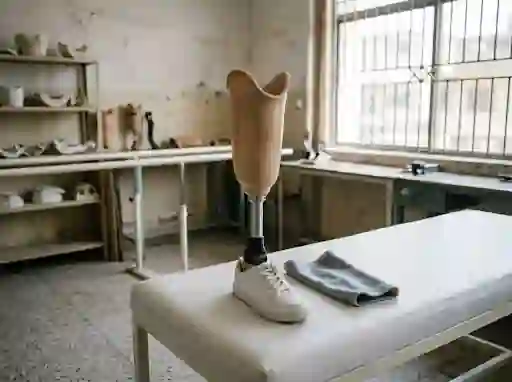
A below knee (transtibial) leg replaces the lower leg and foot when the amputation is between the knee and the ankle. It has four main parts: a socket that holds the stump, a liner or socks for cushioning, a pylon that takes the place of the shin bone, and a foot. Your own knee does the bending, which is why below knee users usually walk faster, further and with less effort than above knee users.
Here it starts at Rs 80,000 for a local build and rises to Rs 900,000 or more with an imported liner, vacuum suspension and a premium carbon fibre foot.
Is it right for you?
What goes into it
Every leg has the same parts. What you pay for is the material and the technology in each one.
| Part | Local build | Imported build | What it changes for you |
|---|---|---|---|
| Socket | Laminated or thermoplastic, cast from your stump | Same, often with a flexible inner socket | Comfort, skin health and how securely the leg sits |
| Liner and socks | Cotton or wool socks, or a foam liner | Silicone or gel liner | Cushioning, sweat and rubbing in summer |
| Suspension | Cuff above the knee or a sleeve | Pin lock or vacuum seal | How the leg stays on, on stairs and when sitting |
| Pylon | Steel or aluminium tube | Titanium or carbon tube | The weight of the leg |
| Foot | SACH or local dynamic foot | Carbon fibre or hydraulic ankle foot | Spring in the step, slopes and distance |
| Cover | Plain finish or a sock | Foam cover shaped to the other leg | How it looks under trousers or shalwar |
Cost in 2026
The socket is made by us in every build. The foot, liner and suspension are what move the price.
Rs 80,000 to 900,000+open top end: imported parts
Laminated socket with socks or a foam liner, a cuff or sleeve, a steel pylon and a SACH or local dynamic foot. Sound, hard-wearing and easy to repair.
Our socket with an imported silicone liner and pin lock, and an imported dynamic or carbon fibre foot. The most common choice for working adults.
Vacuum suspension, a premium liner and a high-end carbon fibre or hydraulic ankle foot from makers such as Össur, Ottobock or Blatchford.
Which build is right depends on your stump, weight and walking, not only the budget. We will tell you plainly if spending more would not help. Full cost guide.
Your visits
We examine the stump, knee and hip, and ask about work, home and stairs. Free, about an hour.
A plaster wrap and careful measurements capture the stump. The socket is made from this.
You stand in a clear socket while we watch the skin for pressure, and adjust it before the final socket.
The finished leg is aligned while you walk, and training starts the same day with exercises for home.
Coming from out of town? Tell us your dates and we will plan the visits close together.
Most people can be assessed six to eight weeks after surgery, once the wound has healed and the stump is no longer swollen. After a diabetic amputation healing often takes longer, and we would rather wait a few weeks than fit a socket over fragile skin.
From the first assessment to the final fitting usually takes one to three weeks, depending on how quickly the test socket settles and how often you can come in. Walking well takes longer. Expect a few weeks of daily practice before you stop thinking about each step, and a few months before long walks feel normal.
While you wait, a shrinker sock and simple exercises make a real difference. Our guide to the first weeks after amputation shows what to do.
Families often ask first about imported feet. We understand why, but the socket decides whether you will wear the leg at all. A beautiful carbon fibre foot on a socket that pinches will sit in a cupboard; a simple foot on a socket that fits well will walk for years.
There are two main socket designs. A patellar tendon bearing (PTB) socket puts more weight on the tendon below the kneecap and on the sides of the shin. A total surface bearing (TSB) socket, worn with a silicone liner, spreads the load over the whole stump. Both work well; the shape, length and skin of your stump decide which suits you.
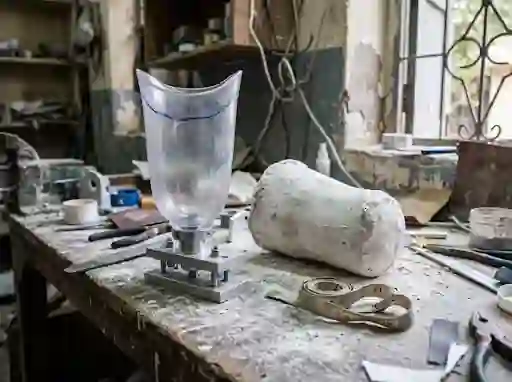
Every leg we make goes through a clear test socket first. You stand and walk in it while we look through the plastic at the skin. Any white or red patch shows pressure, and we correct it before the final socket is made.
Shoes. The foot is set for one heel height. If you switch between chappals, joggers and formal shoes, the leg leans forward or back. Tell us what you wear most days and bring those shoes to the fitting.
Sitting on the floor. Kneeling and sitting cross-legged are possible with a below knee leg, but the back of the socket presses behind the knee. Many users take the leg off for long gatherings, and we can trim the socket to make floor sitting easier.
Heat. A Pakistani summer means sweat inside the liner. Take the liner off at midday, dry the skin and the liner, and carry a small towel. A sweating stump slides in the socket and rubs.
Motorbikes and rickshaws. Riding again is a common goal. On most motorbikes in Pakistan the gear change is under the left foot, so a left below knee user needs to practise gear changes with the artificial foot or have the lever adapted. Tell us at the assessment.
Namaz. Most users pray standing with the leg on and decide for themselves about sajda. Our namaz and wudu guide covers the options.
The stump keeps shrinking for a year or more after surgery. At first you add sock layers; when you need many layers, or the leg starts to rock or pinch, the socket needs replacing. A replacement socket starts from Rs 40,000 and keeps the rest of the leg, so the second year usually costs much less than the first.
Travelling to us?
Tell us your city or country and your travel dates when you call. We plan the visits as close together as the stump allows, so most patients can finish the casting, test socket and fitting in one stay, whether they come from Quetta or fly in from Dubai, with a shorter trip later for adjustments if needed.
Questions
The local build from Rs 80,000: a laminated socket, socks or a foam liner and a SACH or local dynamic foot. It is not a showpiece, but it is sound and easy to repair. We would rather fit this well than put an imported foot on a poor socket.
Many below knee users do once training is finished and the socket fits well. Older patients, and people with weak hips or poor balance, often keep a stick for outdoor walking, and there is no shame in that.
The foot and pylon often last three to five years. The socket usually needs replacing sooner in the first year or two, because the stump keeps shrinking after surgery.
For most active users, yes. It spreads pressure, reduces rubbing and helps hold the leg on. It needs washing every day and replacing about once a year with heavy use. For a bony or scarred stump it can be the difference between walking comfortably and not.
Yes. Most users stand for qiyam with the leg on. Some manage ruku and sajda with it on; others sit or use a chair. Our namaz and wudu guide explains the options.
Related
Replaces the knee too. The knee joint you choose shapes how you walk.
Read moreA cushioned second skin between stump and socket, for comfort and grip.
Read moreSpringy feet that store energy and give a stronger push-off.
Read moreWalking lessons on the new leg, from balance to stairs.
Read moreWe import and fit parts from Ottobock, Össur, Blatchford, Proteor, Fillauer and other makers to order, and we are independent of all of them. Brands we fit.
Fill this in and WhatsApp opens with your message ready to send. Add a photo of the stump in the chat if you can; it tells us more than any description.
Prefer to talk? Call +92 337 841 4002 at any hour.