Filler and insole Rs 10,000 to 45,000
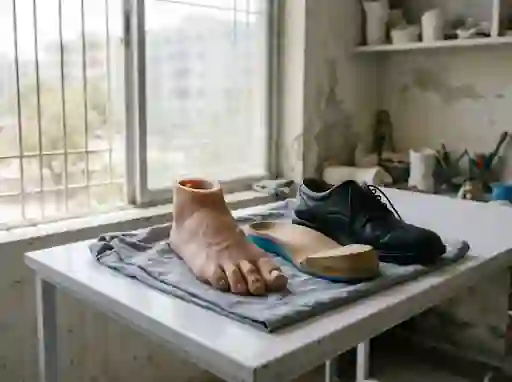
A toe filler or a custom insole with a built-up front. Keeps the shoe in shape and stops neighbouring toes drifting.
- Free foot check
- Fitting in your own shoes
- Pressure review
Toe, ray and midfoot amputation
Losing toes or part of the foot changes balance and pressure far more than most people expect, especially on a diabetic foot. The right filler, insole or silicone partial foot protects what remains, keeps the shoe in shape and evens out your step.
Reviewed by Ummad Shafique Mughal, Consultant Orthotist and Prosthetist. Updated October 2026.
In short
The short answer
It fills the space left after an amputation of toes, a ray (a toe with its long foot bone) or the front of the foot. Depending on how much was removed, it ranges from a simple toe filler inside the shoe, to a custom insole with a built-up front, to a full silicone partial foot, or a small ankle-height socket after a midfoot (Lisfranc or Chopart) amputation.
A toe filler costs from Rs 10,000; a custom silicone partial foot can reach Rs 250,000.
Is it right for you?
The options
How much of the foot was removed decides which option makes sense.
| Option | Suits | Indicative price | Footwear |
|---|---|---|---|
| Toe filler | One or two toes | Rs 10,000 to 25,000 | Closed shoes |
| Insole with filler | Several toes or a ray | Rs 15,000 to 45,000 | Closed shoes and joggers |
| Ankle-height socket | Lisfranc or Chopart amputation | Rs 45,000 to 150,000 | Closed shoes |
| Silicone partial foot | Front of the foot, protective and natural-looking | Rs 80,000 to 250,000 | Shoes and some closed sandals |
Cost in 2026
The more of the foot that is missing, the more the device has to do, and the more it costs.
Rs 10,000 to 250,000local to imported build
A toe filler or a custom insole with a built-up front. Keeps the shoe in shape and stops neighbouring toes drifting.
A small laminated or flexible socket that holds the back of the foot after a midfoot amputation, with a filled front.
A custom silicone foot coloured to match your skin. Protective, cushioned and much more natural under sandals and dress shoes.
Indicative ranges. A firm figure comes in writing after the free assessment and does not change without your agreement. Full cost guide.
Your visits
We look at the skin, pressure points and shoes, and ask about diabetes and blood flow.
A standing impression or measurements, depending on the option.
Fitted in your own shoes, with a walking check.
We look at the skin again after a few weeks of wear.
Bring the shoes you wear most days. A filler is made for a particular shoe.
After toes are removed, the weight that used to spread across them shifts to the remaining toes and the ball of the foot. The neighbouring toes drift into the gap, the shoe creases where the toes were, and new pressure points appear. On a diabetic foot with reduced feeling, that is how a second ulcer starts.
A filler or insole stops the drift, keeps the shoe in shape and moves pressure away from the scar and the remaining toes. It is a small, inexpensive device that protects what is left of the foot.
One or two toes: usually a soft toe filler or an insole is enough.
A ray amputation removes a toe and its long bone, narrowing the front of the foot. A custom insole with a built-up section keeps the foot centred in the shoe.
Lisfranc and Chopart amputations remove the front of the foot, leaving a short foot that can tip down at the front. An ankle-height socket, or a silicone partial foot with a firm sole, holds the foot steady and gives a front to push off from.
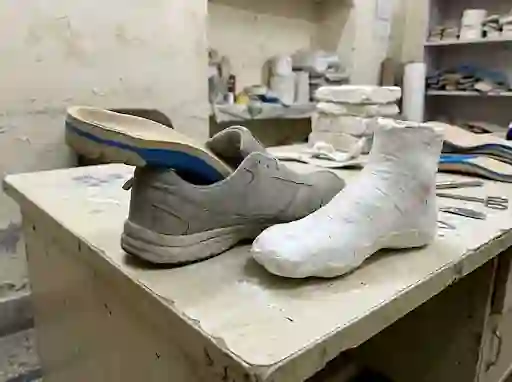
Most fillers need a closed shoe to stay in place. Open chappals and slip-on khussas give little to hold on to, and the foot slides forward. For daily walking, a soft closed shoe with laces or a strap protects the foot best.
For weddings and Eid, a silicone partial foot lets many people wear dress shoes or closed sandals again, which matters to many of our patients and their families.
Our page on fitting after diabetic amputation explains more.
Travelling to us?
Tell us your city or country and your travel dates when you call. We plan the visits as close together as the stump allows, so most patients can finish the casting, test socket and fitting in one stay, whether they come from Quetta or fly in from Dubai, with a shorter trip later for adjustments if needed.
Questions
Often a simple toe filler or a soft insole is enough. Without it, the neighbouring toes drift into the gap and the shoe creases where the toe was, which can rub and cause new sores, especially with diabetes.
After a partial foot amputation, and especially with diabetes, walking barefoot is risky. Wear socks indoors, check your feet after prayers, and avoid hot floors in summer.
Between Rs 80,000 and Rs 250,000, depending on how much of the foot it replaces and how closely it is matched to your skin colour.
A filler needs a closed shoe to stay in place. A silicone partial foot can work in some closed sandals and dress shoes. For daily walking, a soft closed shoe protects the foot best.
Related
Softer sockets and closer skin checks for a stump that heals slowly.
Read moreA short, strong leg for an ankle amputation with a healthy heel pad.
Read moreA free check of the stump and your goals before anything is made.
Read moreThe most common leg we fit: your own knee bends, the socket and foot do the rest.
Read moreWe import and fit parts from Ottobock, Össur, Blatchford, Proteor, Fillauer and other makers to order, and we are independent of all of them. Brands we fit.
Fill this in and WhatsApp opens with your message ready to send. Add a photo of the stump in the chat if you can; it tells us more than any description.
Prefer to talk? Call +92 337 841 4002 at any hour.