Value hydraulic Rs 450,000 to 900,000
A dependable imported hydraulic knee with our socket and a dynamic foot. The everyday choice for active walkers.
- Assessment
- Test socket
- Training
Swing and stance control
A hydraulic knee uses oil pushed through small valves to control how fast the leg swings, so it keeps up whether you stroll or hurry. For active above knee users who walk outdoors every day, it is often the best value knee there is.
Reviewed by Ummad Shafique Mughal, Consultant Orthotist and Prosthetist. Updated October 2026.
In short
The short answer
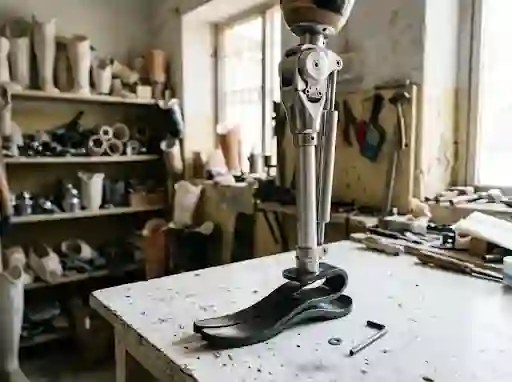
A hydraulic knee has a small cylinder filled with oil. As the knee bends and straightens, oil is pushed through valves, and the resistance rises the faster you walk. That stops the lower leg flicking forward too hard at speed and lets it swing freely when you walk slowly. Some hydraulic knees also add stance control, which resists bending when you put weight on the leg, so it feels safer on slopes and rough ground. Examples include the Össur Mauch Knee and the Ottobock 3R80.
A complete above knee leg with a hydraulic knee costs about Rs 450,000 to 2,000,000, depending on the knee, the foot and the suspension.
Is it right for you?
Compared
Each step up the list adds smoothness and safety, and cost.
| Knee | Adapts to speed | Stability when standing | Indicative price of the leg |
|---|---|---|---|
| Single-axis friction | No, fixed | Depends on your hip | Lowest |
| Polycentric mechanical | A little | Good | Low to middle |
| Hydraulic | Yes, automatically | Good, better with stance control | Rs 450,000 to 2,000,000+ |
| Microprocessor | Yes, continuously | Excellent, with stumble recovery | Knee alone above Rs 2,500,000 |
Cost in 2026
The knee is the biggest single cost. The socket, liner and foot complete the leg.
Rs 450,000 to 2,000,000+open top end: imported parts
A dependable imported hydraulic knee with our socket and a dynamic foot. The everyday choice for active walkers.
Adds resistance when you load the leg, for more confidence on slopes, stairs and rough ground.
Top hydraulic knees with premium liners and feet, for very active users who are not choosing a microprocessor knee.
Indicative ranges. A firm figure comes in writing after the free assessment and does not change without your agreement. Full cost guide.
Your visits
Your speed, activity, current knee and hip strength.
A new socket if the current one does not control the knee well.
Swing and stance settings tuned to your weight and pace.
Learning to let the knee do the work at different speeds.
Coming from out of town? Tell us your dates and we will plan the visits close together.
Inside the cylinder, a piston moves through oil as the knee bends. Small adjustable valves decide how easily the oil can pass. Walk faster and the oil has to move faster, so the resistance rises on its own and the lower leg does not fly forward. Walk slowly and the resistance falls, so the leg swings without dragging. That is the key difference from a friction knee, which is set for one speed only.
Knees with stance control also resist bending when you put weight on the leg with the knee slightly bent. On a slope or a broken pavement, that extra support can stop a stumble from becoming a fall.
Hydraulic knees reward people who walk outdoors every day and change pace often: commuting, shopping, working on their feet, walking with children. Users with strong hips feel the difference most. For someone who walks mainly indoors at one gentle pace, a polycentric knee usually gives the same comfort for less.
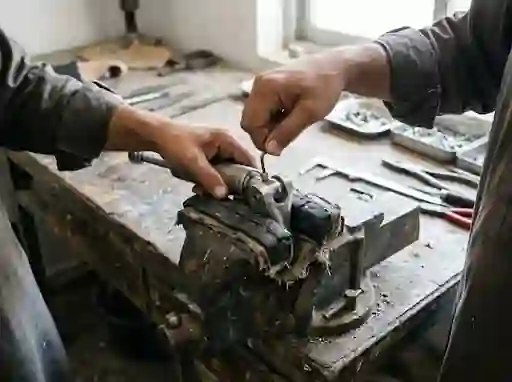
We set the valves at the fitting for the speed you walk on day one. As you get stronger and faster, the settings that felt right at first may start to feel too soft or too stiff. Come back after a few weeks of walking so we can retune the knee; it takes minutes and makes a big difference.
The oil inside can feel slightly different in very hot weather, but well-made knees are designed for a wide range of temperatures. Keep the knee clean and dry, do not try to open or adjust the cylinder yourself, and tell us if you hear new noises or feel the resistance change. Seals wear over years of use, and we arrange servicing when it is needed.
Travelling to us?
Tell us your city or country and your travel dates when you call. We plan the visits as close together as the stump allows, so most patients can finish the casting, test socket and fitting in one stay, whether they come from Quetta or fly in from Dubai, with a shorter trip later for adjustments if needed.
Questions
For active walkers who change speed often, usually yes, because it adapts to your pace. For first-time or older users who value stability above all, a polycentric or locking knee can be the better choice.
About Rs 450,000 to 2,000,000, depending on the knee model, stance control, the foot and the suspension.
Occasionally. The seals and oil can wear over years of use. We check the knee at follow-ups and arrange servicing when it is needed.
Some hydraulic knees with good stance control allow it with practice. Most users go down stairs one step at a time. Microprocessor knees make step over step much easier.
Related
Replaces the knee too. The knee joint you choose shapes how you walk.
Read moreFour-bar knees: stable when standing, short when swinging.
Read moreSensor-controlled knees for active above knee users who walk a lot.
Read moreWalking lessons on the new leg, from balance to stairs.
Read moreWe import and fit parts from Ottobock, Össur, Blatchford, Proteor, Fillauer and other makers to order, and we are independent of all of them. Brands we fit.
Fill this in and WhatsApp opens with your message ready to send. Add a photo of the stump in the chat if you can; it tells us more than any description.
Prefer to talk? Call +92 337 841 4002 at any hour.