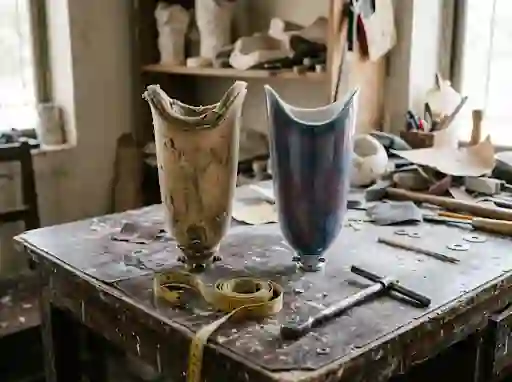
The socket usually goes first
In the first year or two, the stump keeps shrinking as swelling settles and unused muscle wastes. A socket that fitted well on day one becomes loose, and adding socks only goes so far. Once the stump has settled, sockets last much longer, unless your weight changes a lot. See socket replacement.
Signs a part is wearing out
- You need more and more sock layers, or the leg slips
- New rubbing, red marks or pain over a bone
- A click, creak or squeak that was not there before
- A foot that feels flat, or a foot shell that has split
- A knee that feels loose, slow or different
- A liner that is thin, torn or smells after washing
How activity and weight change the answer
A young, active user who walks all day wears parts faster than an older user who walks mainly at home. Weight matters too: feet and knees are rated for a body weight range, and a big weight change can shorten their life or change the fit. Tell us if your activity or weight changes.
Making the leg last longer
- Wash and dry the liner every day and swap two in summer
- Keep sand, dust and water out of the foot, knee and lock
- Fix small problems early, before they damage other parts
- Keep follow-up appointments, even when all seems well
- Never adjust the alignment screws yourself
Children are different
A child's socket is usually outgrown about once a year, and a whole new leg follows every few years, simply because the child grows. Regular checks every three to six months catch it early. See children's legs.
Planning for replacements
Knowing roughly when parts will need replacing lets families budget for them instead of facing a large bill all at once. Our upkeep guide has two five-year examples, and the leg cost calculator lets you try your own.