Skip to content
Artificial LegPakistan اردو

Patient guide

Heat, sweat and your liner

In Karachi and across Sindh and Balochistan, heat and sweat are the commonest everyday problem with an artificial leg. A simple routine keeps the skin healthy and the leg secure through the summer.

  • Free first assessment
  • Firm price in writing
  • Answered 24/7

Reviewed by Ummad Shafique Mughal, Consultant Orthotist and Prosthetist. Updated October 2026.

In short

How do you manage sweat with a prosthetic liner?

The short answer

Take the leg and liner off at midday, dry the skin and the inside of the liner with a clean towel, and put them back on. Wash the liner every night and dry it inside out away from direct sun. In summer, keep a second liner to swap in.

If sweat makes the leg slip or causes rashes despite this routine, come in: a different liner or socket design can help.

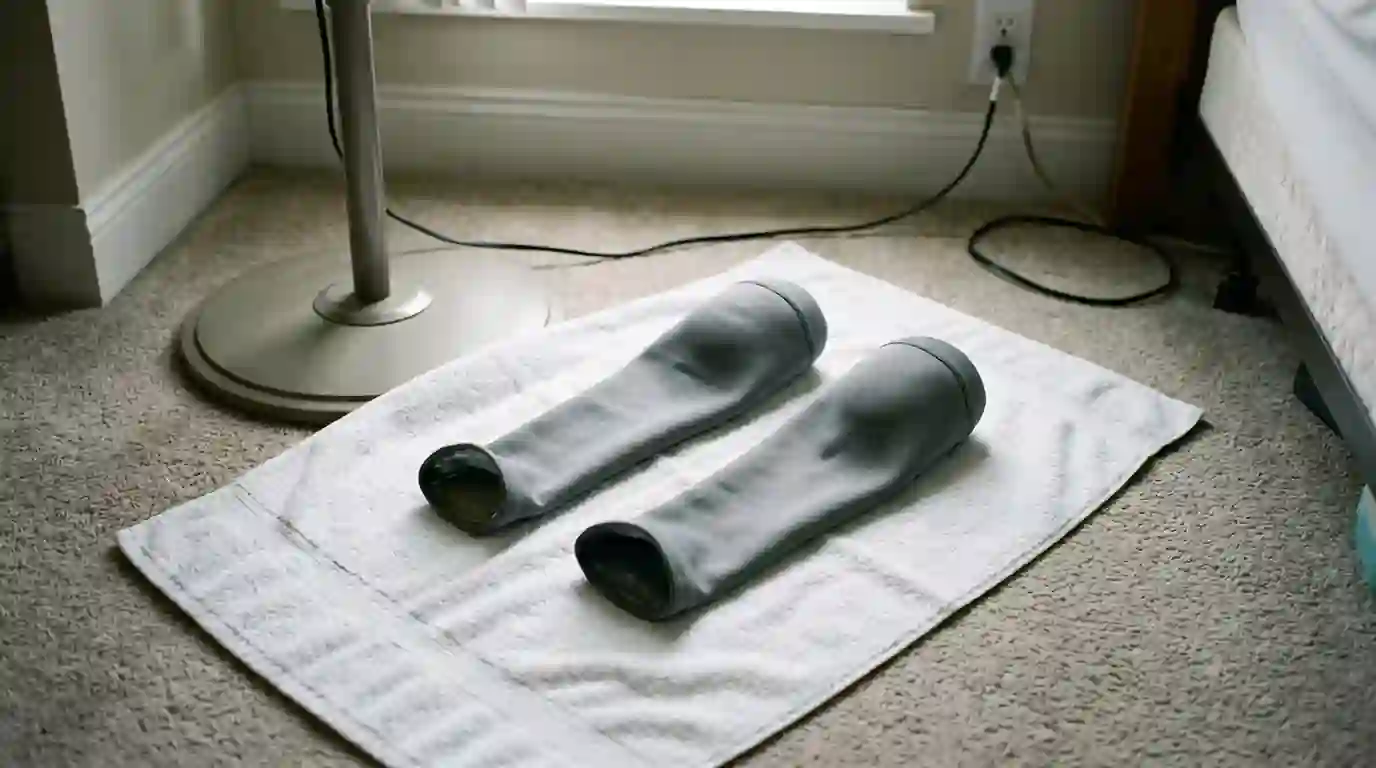
Two prosthetic liners on a towel beside a fan in a bright room
Two liners make summer easier

Why sweat causes trouble

A liner or socket covers the skin completely, so sweat has nowhere to go. A wet liner can slip, the skin softens and rubs, and warmth and moisture encourage rashes and infected hair follicles. Pin lock and vacuum systems can also lose their grip when the liner is wet.

A midday drying routine

  • Sit somewhere cool and take the leg and liner off
  • Dry the stump with a clean towel and let the air reach it for a few minutes
  • Wipe the inside of the liner dry
  • Put the liner and leg back on carefully, without wrinkles

It takes five minutes and saves days of sore skin.
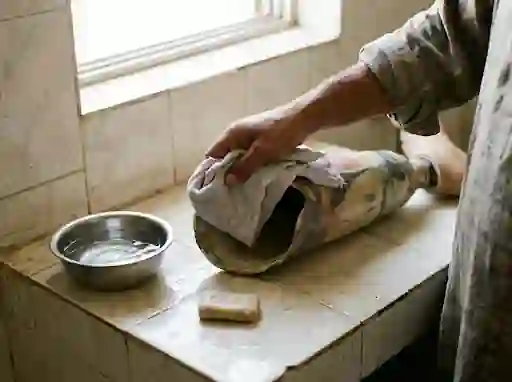
A hand wiping the inside of a prosthetic socket with a soft cloth
Clean and dry the socket and liner daily

Two liners for summer

With two liners, you can swap a damp one for a dry one at midday and give each a full day to dry after washing. Liners also last longer when they are rotated. See liners for types and prices.

Skin care in the heat

Wash the stump every evening with mild, unperfumed soap and dry it well. Avoid heavy creams just before putting the liner on; use them at night if the skin is dry. Avoid shaving the stump. Check the skin daily for rashes or small boils; our guide to skin problems explains what to look for.

Sweat and the fit

Stumps often swell slightly in the heat, and sweat changes how the liner grips. If the leg feels tighter by afternoon or keeps slipping, a change in sock layers may help. If not, the socket or suspension may need adjusting for summer.

When to ask us

Tell us if sweat causes slipping, rashes or blisters despite a good routine. Some users do better with a different liner material, a socket with a breathable inner wall, or a different suspension. Ask us before trying antiperspirants or powders on the stump, as some products irritate the skin under a liner.

Questions

Questions people ask

Why does my leg slip in summer?

Sweat makes the liner slippery and can break a pin lock or vacuum grip. A midday drying routine and a spare liner usually fix it; if not, come in.

Should I have two liners?

In a hot climate, yes. Swapping a damp liner for a dry one at midday helps the skin, and liners last longer when rotated.

Can I use antiperspirant on my stump?

Ask us first. Some products help, but others irritate the skin under a liner.

How should I dry my liner?

Inside out, on a stand or a bottle, away from direct sun and heaters.

Related

Read next

Liners

Types, prices and care.

Read more

Jacobabad

Fitting a leg for extreme heat.

Read more

WhatsApp

Questions about your own leg? Ask us

Fill this in and WhatsApp opens with your message ready to send. Add a photo of the stump in the chat if you can; it tells us more than any description.

  1. Fill in what you know. Leave anything you are unsure about blank.
  2. Send it on WhatsApp and attach a clear stump photo from the front and the side.
  3. We reply with the options, the likely price range and the next step.

Prefer to talk? Call +92 337 841 4002 at any hour.

Opens WhatsApp on your phone or computer. Nothing you type here is stored on this website.

CallWhatsApp